Finding effective behavior charts for preschoolers helps teachers and parents reinforce positive actions, track progress, and support social-emotional learning. The following selections are durable, visually engaging, and easy to customize for classrooms, homes, and homeschool settings. Each entry highlights how the chart works, what makes it suitable for young children, and practical usage ideas.
| Product | Brand | Key Benefit | Approximate Size |
|---|---|---|---|
| AUVCAS Student Behavior Clip Chart | AUVCAS | 7 pockets with customizable cards and clothespins for positive reinforcement | Pocket chart size varies; compact for desks or walls |
| Pajean 253 Pcs Behavior Pocket Chart | Pajean | Bright, colorful set with cards, cards, and name tags for classroom management | 18.7 x 26.38 inches (pocket chart) |
| ABCxGOOD Helping Hands Pocket Chart | abcxgood | Job cards and palm cards to assign classroom duties | Blue, 29″ x 20.5″ |
| Kenson Kids We Can Do It! | Kenson Kids | Dry-erase incentive chart with reusable stars | 14.5″ x 30″ |
| CHEFAN Behavior Chart | CHEFAN | Compact pocket chart with 36 pocket cards for classroom rules | Pocket chart size not specified |
AUVCAS Student Behavior Clip Chart
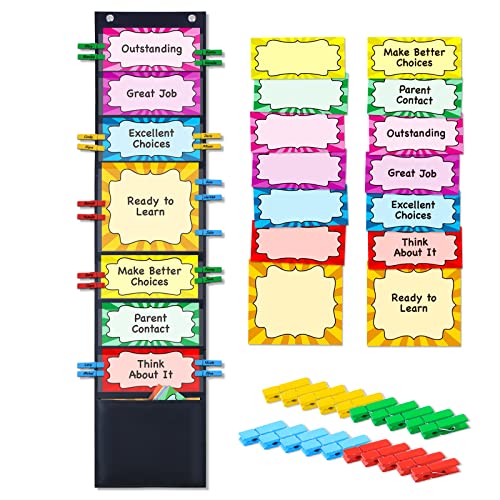
The AUVCAS behavior clip chart is designed for durability and clear visual feedback. It features seven pockets for displaying behavior cards and includes fourteen cards plus forty clothespins. An under-pocket provides storage for markers, cards, and clothespins, making it practical for daily classroom use or home routines. The double-sided color cards allow quick customization—one side displays color indicators, the other side is blank to tailor to specific themes or rules. This setup helps teachers and parents reinforce positive behavior and clearly communicate expectations to preschoolers.
Pajean 253 Pcs Behavior Pocket Chart

This expansive classroom management set from Pajean combines a black pocket chart with 3 metal hooks, a title card, 30 behavior cards, 60 punch cards, 32 name tags, and a large assortment of colorful cards. The color-coded system (green, yellow, blue, red, purple) paired with cartoon-style behavior cards helps students understand expectations through visual cues. The size and quantity are well-suited for classrooms, living rooms, offices, or wall displays, offering flexibility for ongoing behavior tracking and rewards.
ABCxGOOD Helping Hands Pocket Chart
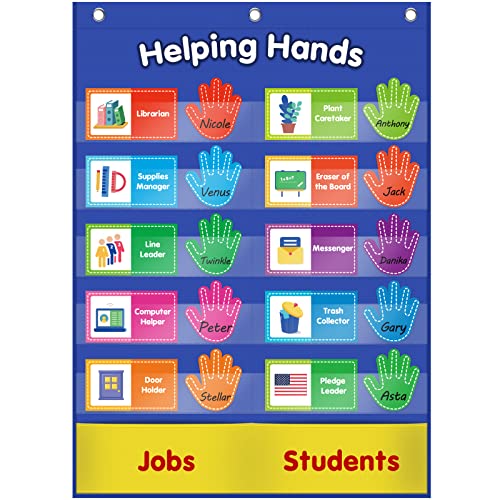
The ABCxGOOD pocket chart emphasizes classroom jobs and teamwork. It includes 52 cards, covering job roles like Line Leader, Messenger, Plant Caretaker, and more, plus blank cards for customization and palm cards for name labeling. With cards and prompts that encourage responsibility, this chart supports daily routines and classroom management, making it a practical addition for preschool classrooms and homeschool settings alike.
Kenson Kids We Can Do It!
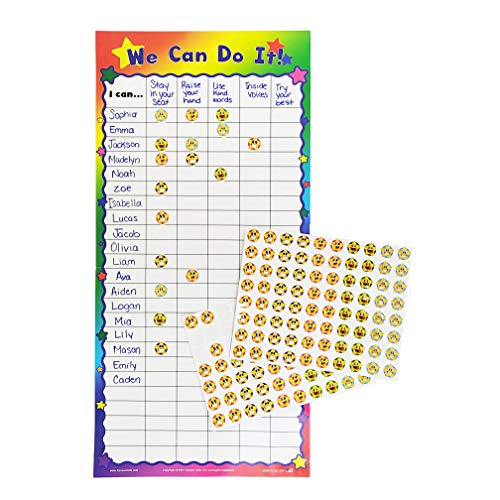
The Kenson Kids chart is a versatile dry-erase incentive system designed for home, school, and Sunday school. Its reusable stars on a cling surface provide a simple way to monitor chores, behavior, and positive actions across family members or students. The larger scale helps maintain visibility in classroom corners or home study areas, and the durable build supports frequent use in preschool environments.
CHEFAN Behavior Chart for Classroom Management

CHEFAN’s classroom behavior chart focuses on a compact pocket chart design with 36 pocket cards. It is presented as a practical solution for teachers seeking an organized method to distribute class work, promote responsibility, and encourage teamwork. The chart’s felt construction adds durability and ease of cleaning, supporting long-term use in kindergarten and preschool settings where frequent activity occurs.
Buying Guide: Key Purchase Considerations
- Durability and materials: Look for pocket charts with sturdy fabrics or felt, reinforced seams, and durable cards that resist frequent handling by young children.
- Size and visibility: Choose a chart large enough to be read from a distance in a classroom, but compact enough to fit on a wall, door, or desk area in a home setting.
- Customization options: Cards that are blank or double-sided allow you to tailor rules, themes, and rewards to your curriculum or family routines.
- Card variety and colors: A broad color palette helps preschoolers associate behaviors with specific signals. Cartoon or kid-friendly artwork can improve engagement.
- Storage and organization: Consider charts with an under-pocket or included storage for markers, cards, and clothespins to keep supplies tidy and accessible.
- Reusability: Reusable dry-erase or cling-on stars extend the life of the chart and reduce ongoing replacement costs.
- Use case versatility: Some charts work well for classrooms, others for homes or homeschool co-ops. A flexible system that supports multiple settings can be more economical.
- Maintenance: Washable fabrics or wipe-clean surfaces simplify cleaning after messy activities or daily use in preschool environments.