For American parents and teachers seeking reliable tools to support early reading, decodable books offer structured phonics practice that reinforces new skills without relying on guesswork. This article highlights five well-regarded decodable reading sets designed for kindergarten through early elementary learners. Each selection emphasizes phonics-focused readers, controlled vocabulary, and meaningful illustrations to aid comprehension as students progress. Read on to compare features, engage with authentic resources, and identify the best fit for your classroom or home library.
| Product | Brand |
|---|---|
| hand2mind Guided Phonics + Beyond Decodable Books Unit 2 | hand2mind |
| Bob Books – Set 1: Beginning Readers Box Set | Scholastic |
| hand2mind Guided Phonics + Beyond Decodable Books Unit 4 | hand2mind |
| hand2mind Guided Phonics + Beyond Decodable Books Unit 3 | hand2mind |
| Junior Learning Decodable Readers The Pods – Phase 2 | Junior Learning |
Hand2mind Guided Phonics: Beyond Decodable Unit 2

Designed to actively engage learners in decoding practice, this unit blends phonics readers with targeted decodables to strengthen early literacy proficiency. The collection features ten fiction and ten nonfiction stories, each structured to prompt students to apply phonics skills before looking at pictures. This approach helps reduce guessing and cueing, supporting independent reading. The included phonemic awareness activities ensure that irregular high-frequency words are introduced only after they are explicitly taught in Guided Phonics + Beyond Focus Lessons. This sequencing aligns with structured literacy approaches and supports foundational reading development.
Bob Books Set 1: Beginning Readers Box Set

Bob Books Set 1 offers a classic progression for emergent readers, designed to support early success with simple, decodable text and clear illustrations. The program emphasizes easy-to-read sentences and consistent phoneme-grapheme correspondences that help children sound out words. Packaging is straightforward and classroom-friendly, making it a popular choice for kindergarten and first-grade classrooms and for home use. While primarily focused on basic decodables, it complements broader phonics curricula by providing controlled vocabulary that reinforces foundational skills in a low-stress format.
Hand2mind Guided Phonics Unit 4: Beginning Readers

This unit continues the structured phonics approach, pairing decodable stories with deliberate phonics instruction. Each book contains ten fiction and ten nonfiction stories, designed to prompt readers to apply phonics skills before viewing pictures, thereby strengthening decoding accuracy. The accompanying focus lessons ensure that learners encounter irregular high-frequency words only after they have mastered the essential phonics patterns. This arrangement supports a science of reading-informed framework and helps teachers build a solid decoding foundation before tackling more complex passages.
Hand2mind Guided Phonics Unit 3: Beginning Readers

Unit 3 emphasizes continued expansion of phonics knowledge with decodable selections that reinforce decoding strategies. The same framework—ten fiction and ten nonfiction titles—encourages readers to practice decoding skills prior to relying on illustrations for comprehension. This consistent structure helps learners build automaticity with common letter-sound correspondences while introducing more complex word patterns in a controlled, supportive context. The materials align with Science of Reading principles and are suitable for both small-group and independent reading activities.
Junior Learning Decodable Readers: The Pods Phase 2

Phase 2 of The Pods focuses on the first 21 letter sounds and introduces common exception words with dedicated attention. As part of the Science of Reading program, this set integrates current research across education, psychology, and cognitive neuroscience to support how children learn to read. It includes 12 fiction books with bright, engaging illustrations and a clear progression guide at the front, helping teachers map a logical path from phonemic awareness to fluent decoding. This makes it a strong option for early elementary classrooms seeking a research-informed decodable library.
Decodable Readers Book Set: Short Vowels and Blends

This book set provides concise decodable texts with short vowels, consonant blends, and digraphs, positioned for early readers aged 5–8. It serves as a practical teaching tool to practice phonics in context while building a love for reading. The material is designed to be accessible for parents and teachers, and it emphasizes meaningful practice with decodable words and supportive illustrations. Readers can apply decoding skills in isolation and then connect those skills to broader reading comprehension tasks across genres.
Junior Learning Decodable Readers Phase 3: Phonics
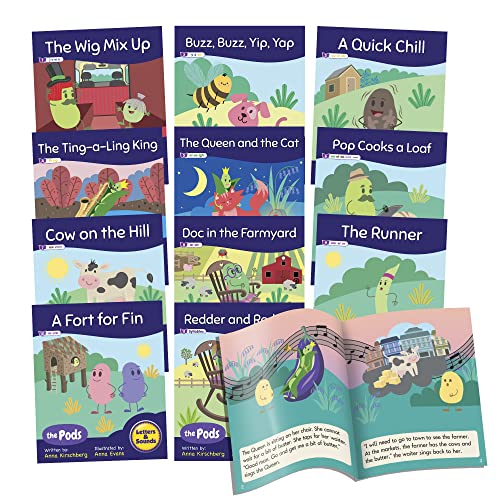
Phase 3 expands the decodable text library with an additional 12 fiction titles and a continued focus on phonics progression, supporting learners as they tackle more advanced letter-sound relationships. The materials reflect ongoing alignment with the Science of Reading framework and provide a structured route from early phonemic awareness to confident decoding. The progression front matter helps educators pace instruction and ensures consistency across lessons and reading activities.
Buying Guide: Key Considerations For Choosing Decodable Books
- Phonics scope and sequence: Look for decodable sets that align with a clear phonics progression (short vowels, blends, digraphs, and progressively more complex patterns). Consistency helps students build automatic decoding skills.
- Text structure and length: Prefer books with short, focused passages and a balance of fiction and nonfiction to support varied literacy goals while maintaining decodability.
- Controlled vocabulary: Decodable readers should minimize reliance on guessing by featuring words that match the taught phonics patterns.
- Imagery and comprehension: Image cues should complement the text without masking decoding challenges. Good decodables use pictures to support, not substitute, understanding.
- Phonemic awareness integration: Units that include explicit phonemic activities help students connect sounds to letters and build robust foundational skills.
- Teacher and parent support: Consider available lesson plans, activities, and progression guides that accompany the decodable set for consistent implementation.
- Science of Reading alignment: Materials informed by current literacy research provide a credible framework for building decoding and reading fluency.
- Durability and classroom suitability: For classroom use, choose sturdy books with inviting illustrations and a setup that supports small-group instruction and independent reading time.
- Accessibility and inclusivity: Select sets with varied content to engage diverse learners and address different reading levels within a program.
Additional Considerations And Perspectives
- Standalone decodables vs. integrated curricula: Some sets are designed as complete curricula, while others function best as supplements to broader phonics programs.
- Home vs. classroom use: Home-friendly formats often emphasize ease of use and quick daily practice; classroom editions may include additional teacher guides and pacing recommendations.
- Progress tracking: Look for resources that offer progress indicators or formative assessment suggestions to monitor decoding growth over time.
- Cultural and linguistic relevance: Choose decodables with inclusive content and accessible imagery to reflect a broad range of learners and neighborhoods.
- Budget and value: Consider the number of titles, the depth of phonics coverage, and the long-term usefulness for repeated practice across terms.