Finding a reliable digital dictionary for young learners can boost vocabulary, reading comprehension, and spelling confidence. This guide highlights five kid-friendly options that blend robust dictionaries with engaging tools like word games, bilingual support, and test preparation resources. Each choice is evaluated on ease of use, breadth of definitions, and learning features to help students grow their language skills effectively.
| Product | Brand | Key Features |
|---|---|---|
| Franklin MDE-1200 Electronic Dictionary | Franklin | English dictionary & thesaurus, 80k headwords, vocabulary tools, grammar aids |
| Merriam-Webster’s Dictionary for Children | Merriam-Webster | Child-friendly definitions, vocabulary support |
| Franklin DBE-1200 Bilingual Dictionary | Franklin | English-Spanish dictionary, phrasebook, bilingual learning |
| Scholastic Pocket Dictionary of Synonyms | Scholastic | Compact thesaurus and antonyms reference |
| Merriam-Webster’s Elementary Dictionary | Merriam-Webster | Updated kid-friendly vocabulary, quotes from literature |
Franklin MDE-1200 Electronic Dictionary

Franklin’s MDE-1200 combines an English dictionary with a comprehensive thesaurus, offering 80,000 headwords, 250,000 definitions, 15,000 synonyms, and 12,000 antonyms. The built-in grammar and test tools cover irregular verbs, verb conjugation, noun/adjective inflection, confusables, and vocabulary banks for TOEFL, GRE, SAT, GMAT, and TOEIC prep. Learning features include Crossword Solver, Anagram Solver, and Word Builder to support spelling, puzzle solving, and word formation. The device’s LCD screen and portable design make it suitable for on-the-go study and classroom use.
Merriam-Webster’s Dictionary for Children

This child-oriented dictionary from Merriam-Webster emphasizes accessible, age-appropriate definitions and clear usage examples. It serves as a practical classroom reference, helping kids expand their vocabulary and improve reading comprehension. While concise, it’s designed to align with classroom needs, making it a reliable everyday tool for students conceptually building language skills.
Franklin DBE-1200 Bilingual Dictionary

This bilingual dictionary supports English-Spanish and Spanish-English lookups, featuring over 150,000 words and one million translations, plus a full English dictionary with 250,000 definitions for multilingual learners. The 7,000-entry English-Spanish-English phrasebook covers daily conversation, travel, business, and healthcare topics. It also includes English grammar tools like verb conjugation and vocabulary for test prep, making it a strong option for bilingual students or families seeking cross-language support.
Scholastic Pocket Dictionary of Synonyms

Scholastic’s Pocket Dictionary focuses on synonyms, antonyms, and homonyms in a compact format, making it ideal for quick reference and daily practice. It’s a handy classroom or home resource for building a richer vocabulary and understanding nuanced word meanings. The compact size supports easy carrying in backpacks and pencil cases for on-demand learning.
Merriam-Webster’s Elementary Dictionary
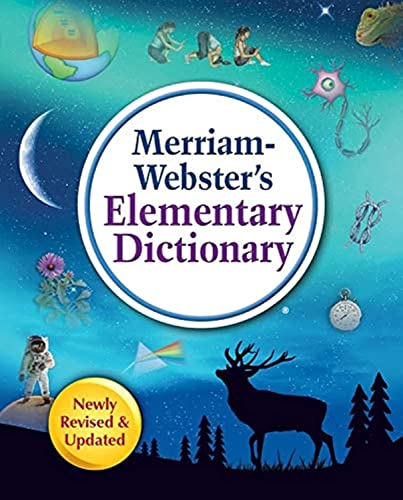
This elementary dictionary from Merriam-Webster features 36,000 updated entries, with quotes from children’s literature to spark interest and engagement. It also includes word histories and usage notes, supporting students as they build vocabulary and reading comprehension. The resource is well-suited for home study and classroom reference alike, providing a solid foundational tool for language learnings.
Buying Guide: Key Purchase Considerations
- Age and reading level: Choose a dictionary with age-appropriate definitions and features that align with current curriculum.
- Content breadth: Consider dictionaries that include synonyms, antonyms, and example sentences to support varied language goals.
- Learning tools: Look for built-in grammar aids, conjugation guides, and test-prep resources to reinforce classroom concepts.
- Language support: Bilingual options can benefit multilingual learners or families seeking cross-language practice.
- Portability and ease of use: Handheld devices with clear displays work well for classroom, home, and travel use.
- Durability and updates: Durable builds and regularly updated content help ensure long-term usefulness in a busy classroom environment.
- User interface: Simple navigation and kid-friendly layouts reduce frustration and encourage independent learning.
Overall, the best digital dictionary for kids balances comprehensive word data with engaging tools. For learners who benefit from bilingual support, the Franklin DBE-1200 offers robust cross-language features. For vocabulary growth and classroom readiness, Merriam-Webster’s Elementary Dictionary provides reliable, kid-friendly entries. The Franklin MDE-1200 adds solving games and grammar aids, while Scholastic’s pocket reference emphasizes quick access to synonyms and related terms. Each option serves different learning contexts, from solo study to classroom activities.