When planning final arrangements, the right end of life planner helps keep critical details organized and accessible. This guide highlights five top options designed for different needs, from large-print layouts to durable, lay-flat designs. Each product is best suited for specific buyers—families coordinating multiple documents, seniors seeking easy reading, or executors needing comprehensive estate details. Use the table below to compare core attributes at a glance.
| Product | Brand | Size | Best For |
|---|---|---|---|
| End of Life Planner (Purple) | Blugool | 7.9″ x 10.4″ | Easy, all-in-one organizer for personal, medical, and final wishes |
| End of Life Planner (Blue) | Homlive | 7.36″ x 10.4″ | Clear sections with large font and corner guides |
| Planners with Purpose End of Life Planner | Planners with Purpose | 7.5″ x 10″ | Guided prompts for estate and legacy details |
| Molekaus End Of Life Planner | molekaus | 7″ x 10″ | Large-print, flat-lay design for easy writing |
| I’m Dead, Now What? Planner | PETER PAUPER PRESS | Standard | Core information for belongings and business affairs |
End of Life Planner Purple — Blugool

This spiral planner covers 16 sections, including personal information and final wishes. Best for individuals who want a compact yet comprehensive record with easy page turning, thanks to twin-wire binding. It includes an inner pocket, pen holder, and elastic band for organization. Suitable for someone organizing personal, medical, property, and beneficiary details in one place.
Who it’s best for: an individual or caregiver seeking a thorough, organized death-planning book with a focus on final arrangements. Caution: smaller size may require careful handwriting to maintain readability in shared copies.
End of Life Planner Blue — Homlive
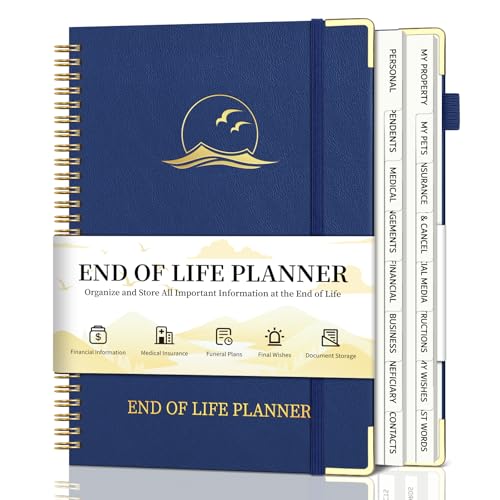
This planner emphasizes a comprehensive layout with 16 sections, large font, and oversized labels to locate pages quickly. It provides a clear path for recording personal, medical, property, beneficiaries, and final wishes information. Best for readers who need legible, large-print sections and clear tab classification to guide others during difficult times.
Who it’s best for: seniors or family members who prefer large-print text and easily navigable tabs. Caution: Blue edition’s emphasis on readability may mean additional space is needed for thicker documents.
End Of Life Planner With Prompts — Planners With Purpose

This end-of-life planner offers 16 sections with guided prompts to document medical details, will instructions, power of attorney, life insurance, asset distribution, funeral preferences, and passwords. Best for those who want structured prompts to reduce uncertainty and ensure no critical detail is overlooked. It uses a lay-flat, spiral design and vegan hardcover for durability.
Who it’s best for: individuals who want guided prompts to ensure comprehensive coverage. Caution: prompts may require thoughtful phrasing to fit specific jurisdictional requirements.
End Of Life Planner — Molekaus

Featuring 16 comprehensive sections, this planner emphasizes convenience for family with flat-lay usability and large-print options. It helps capture personal,family information, medical info, assets, beneficiaries, pet data, and final wishes. Best for readers who need easy readability and a quick reference guide for essential documents.
Who it’s best for: a family-oriented buyer who prioritizes ease of use and quick access. Caution: size is compact, so extensive notes may require additional supplemental pages.
I’m Dead, Now What? Planner — Peter Pauper Press

This planner focuses on core information: personal details, medical data, and key contacts. Best for someone seeking a concise, straightforward reference for belongings, business affairs, and basic wishes. It serves as a practical starting point for end-of-life planning without overloading the user with too many sections.
Who it’s best for: individuals who want a compact, essential-information booklet. Caution: fewer sections may require additional add-ons for complete coverage of all needs.
Peace Of Mind Planner — Peter Pauper Press

This hardcover planner emphasizes durability with concealed wire-o binding and archival, acid-free paper to preserve information. Best for readers who value long-term preservation and a sturdy format for recording essential details about belongings, business affairs, and final wishes.
Who it’s best for: buyers seeking a durable, archival-grade option to maintain records over time. Caution: hardcover format may be less forgiving for frequent writing on the go.
End Of Life Planner Blue — Blugool
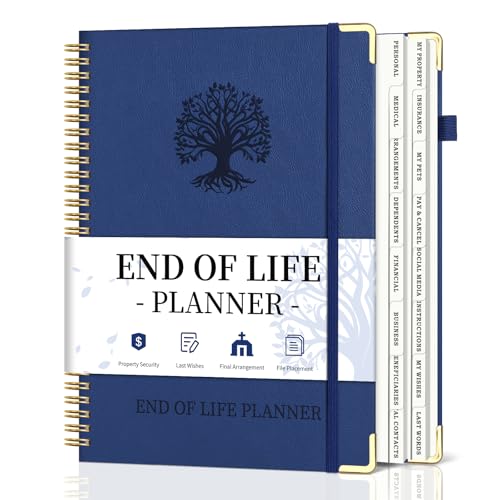
This blue edition mirrors a 16-section structure with detailed categories for catalog pages, personal and family info, medical data, property, assets, beneficiaries, and final wishes. Best for readers who want a balanced, comprehensive planner with a visually clear layout and easy navigation.
Who it’s best for: those who prefer a similarly structured but differently colored option for easy distinction among multiple planners. Caution: color choice may influence accessibility depending on lighting or personal preference.
Buying Guide
- What sections matter most? Prioritize planners with 16 well-defined sections covering personal data, medical details, assets, beneficiaries, and final wishes to minimize gaps during coordination.
- Format and readability: choose lay-flat spirals or sturdy hardcovers if ease of use and long-term preservation are priorities. Large print helps readers with visual needs.
- Organization features: look for inner pockets, pen holders, elastic bands, and tab classifications to keep documents secure and easy to locate quickly.
- Durability vs. portability: decide between compact sizes for everyday use or larger formats for in-depth planning with durable bindings.
- Guided prompts vs. free-form notes: guided prompts reduce omissions but may require jurisdiction-specific phrasing; ensure prompts align with intended legal requirements.
- Access and sharing: consider whether you need copies for trusted relatives or executors, and how easily information can be updated or transferred to others.
FAQ
- What should be included in an end-of-life planner?
- Why choose a large-print planner?
- Are these planners legally binding?
- How should I store and share planner information?
- Is a lay-flat design important?
- How many planners should I consider?
Key details include personal and contact information, medical information, asset and property lists, beneficiaries, insurance, final wishes, and funeral plans.
Large print improves readability, helping others locate information quickly in stressful situations.
End-of-life planners are organizing tools. They support decision-making but are not substitutes for legally binding documents; consult professionals for wills and powers of attorney.
Keep copies in a secure, accessible location and provide trusted executors or family members with access instructions to ensure timely use.
Lay-flat designs make writing and review easier, especially when the book is opened to a page for reference while completing details.
Consider one core planner plus a compact supplementary guide if needed to cover all personal, medical, financial, and final-wishes information.