Choosing the right interactive books for preschoolers can boost curiosity, language skills, and fine motor development. The following selections are designed to captivate three-year-olds with pop-ups, flaps, buttons, and hands-on activities. Each title blends storytelling with interactive elements to encourage independent exploration, early literacy, and sensory play. Below is a quick overview of five hand-picked options and what makes them suitable for toddlers and early learners.
| Product | Brand | Format | Interactive Element |
|---|---|---|---|
| The Wide-Mouthed Frog (A Pop-Up Book) | Dial Books | Pop-Up | Pop-up pages |
| Don’t Push the Button!: A Funny Interactive Book For Kids | Sourcebooks Jabberwocky | Board Book | Interactive push button prompts |
| Dear Zoo: A Lift-the-Flap Book | Little Simon | Lift-the-Flap | Flaps to open |
| Melissa & Doug Poke-a-Dot! Who’s in the Ocean? | Melissa & Doug | Board Book | Push-button “dots” to pop |
| Preschool Learning Activities – Tracing Books for Kids Ages 3-5 | Momo & Nashi | Workbook | Tracing and skill-building activities |
The Wide-Mouthed Frog (A Pop-Up Book)

The Wide-Mouthed Frog (A Pop-Up Book) blends classic storytelling with engaging pop-up scenes, inviting toddlers to explore color, rhythm, and animal sounds. This title from Dial Books provides a visually rich experience that supports early language development and memory through interactive pages. Its sturdy construction is suited for curious three-year-olds who enjoy turning pages and exploring three-dimensional details.
Don’t Push the Button!: A Funny Interactive Book For Kids

Don’t Push the Button! invites children to press a button and hear a silly consequence—until they must resist the urge. Sourcebooks Jabberwocky presents a playful, age-appropriate lesson about self-control wrapped in humor. The interactive format helps develop listening skills, cause-and-effect understanding, and vocabulary in a lighthearted, engaging way.
Dear Zoo: A Lift-the-Flap Book

Dear Zoo offers a classic lift-the-flap experience where readers discover the perfect pet by lifting flaps to reveal animals with playful surprises. Published by Little Simon, this title supports early literacy through repetitive text, prediction, and engagement with simple animal vocabulary. It’s well-suited for interactive reading sessions between parent and child or caregiver-led exploration.
Melissa & Doug Poke-a-Dot! Who’s in the Ocean?

Melissa & Doug Poke-a-Dot! Who’s in the Ocean? combines ocean-themed exploration with tactile stimulation. The built-in buttons provide satisfying “pop” sounds that invite repeated interaction, supporting fine motor skills and sensory development. The sturdy board pages and chunky buttons are designed for small hands, making it a dependable option for 3-year-olds who love hands-on learning.
Preschool Learning Activities – Tracing Books for Kids Aged 3-5
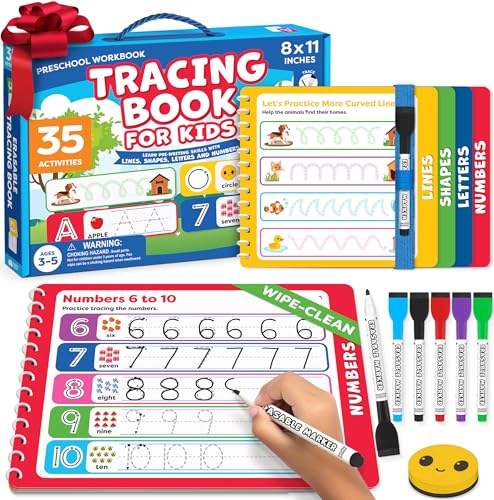
Preschool Learning Activities from Momo & Nashi offers a dry-erase tracing workbook that is designed for repeated use. It includes markers, an eraser, and a storage box, encouraging independent practice in letter tracing, shapes, lines, and numbers 1-10. The activities aim to build fine motor control, writing readiness, and early mathematical familiarity, while supporting attention and independent play in home or classroom settings.
Buying Guide: Key Purchase Considerations
When selecting interactive books for a 3-year-old, consider how the book engages multiple senses and supports early literacy. Buttons, flaps, and pop-ups should feel sturdy enough for little hands and frequent use. Look for age-appropriate text with predictable patterns to aid vocabulary and memory. Durability matters; board books and pop-up formats should withstand rough handling. Thematic variety—animals, humor, and everyday objects—helps maintain interest over weeks. Consider accompanying materials, such as dry-erase supplies or additional learning activities, to extend learning beyond a single read.
Reading goals can vary: some titles emphasize vocabulary expansion, others focus on fine motor skills or cognitive concepts like cause-and-effect. A mix of storytelling and hands-on play tends to produce the most benefit for three-year-olds, who are building language, attention, and early writing foundations. Always supervise interactive features to ensure safe use and avoid frustration, especially with flap or pop-up elements.
For parents and educators, it’s useful to compare the following aspects across titles: interactive method (buttons, flaps, lift-the-flap, or pop-ups), durability (board pages vs. paper), age suitability, and the potential for independent play versus guided reading. Selecting a variety of formats helps children encounter different ways to engage with stories and activities, supporting a well-rounded early learning routine.
Additional considerations include visual appeal, color contrast, and the presence of repetitive phrases that reinforce memory. If a child loves the ocean or animals, choose titles that reinforce those themes while integrating basic concepts like counting, colors, shapes, and letters. Finally, assess whether the book supports transportation between home and a classroom, ensuring consistent use across settings.