For families seeking engaging, screen-free ways to support early literacy and math, paper workbooks and activity books remain essential. This guide highlights five top picks that align with kindergarten readiness goals—from phonics and tracing to counting and problem-solving. Each selection offers age-appropriate activities, colorful visuals, and teacher-approved formats to reinforce foundational skills at home or in the classroom.
| Product | Brand | Key Focus |
|---|---|---|
| School Zone Thinking Skills Workbook: 64 Pages | School Zone | Problem-Solving, Logic & Reasoning |
| School Zone Connect the Dots Workbook: 32 Pages | School Zone | Counting, Dots-to-Dots |
| Carson Dellosa Phonics for Kindergarten Workbook | Carson Dellosa Education | Phonics, Sight Words |
| Channie’s Easy Peasy Alphabet Tracing Book | Channie’s | Alphabet Tracing, Writing Practice |
These options provide a mix of problem-solving, handwriting practice, phonics, and tracing activities—designed to support classroom standards while offering enjoyable activities for young learners. Below, each product is explored with its strengths and how it complements a kindergarten learning plan.
School Zone Thinking Skills Workbook For Young Learners

The School Zone Thinking Skills Workbook offers 64 pages of activities focused on problem-solving, logic, and reasoning for preschool to kindergarten age. The activities are designed to boost critical thinking and mental agility, aligning with early cognitive development goals. The workbook uses age-appropriate prompts to encourage step-by-step thinking and safe exploration of ideas, making it a solid addition to any early learning routine.
School Zone Connect The Dots Workbook

This 32-page workbook emphasizes dot-to-dot activities, counting, and number puzzles, helping young learners practice number recognition and sequential ordering. The book’s simple, friendly layout supports early math skills while offering a enjoyable activity style that keeps children engaged during practice sessions at home or in a classroom center.
Carson Dellosa Phonics For Kindergarten Workbook
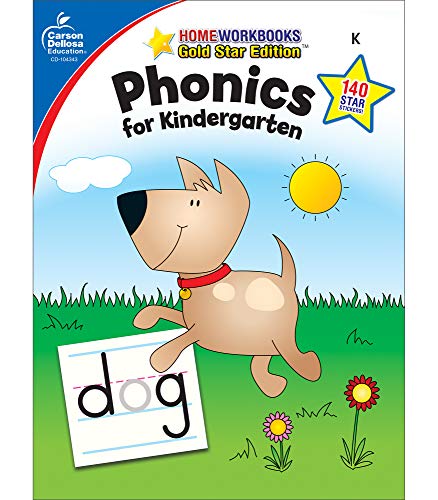
The Carson Dellosa Phonics for Kindergarten Workbook combines sight word practice with beginning consonant and short vowel sounds. It includes engaging games and puzzles that reinforce early language arts skills. An incentive chart and 140 stickers accompany the activities, adding motivation for consistent practice and reinforcing positive study habits in young learners.
Channie’s Easy Peasy Alphabet Tracing Book

Channie’s Easy Peasy Alphabet Tracing Book is designed for handwriting development with color-coded tracing blocks. It features double-sided tracing, traceable pages for each letter, and color cues to help students maintain correct letter formation and spacing. The structured layout supports consistent penmanship practice and helps young learners build confidence in handwriting tasks.
Buying Guide
- Skill alignment: Choose books that target key kindergarten foundations—phonics, handwriting, counting, and basic logic. A mix ensures balanced skill development.
- Engagement level: Visual appeal, colors, and interactive pages sustain attention. Look for activities that combine tracing, puzzles, and coloring to maintain motivation.
- Progression and pacing: Books should offer a gradual increase in difficulty. Start with tracing and letter formation before moving to more complex tasks like problem-solving and full sentences.
- Teacher and parent resources: Incentives, stickers, and activity variety can support independent practice and classroom use.
- Durability and size: Prefer sturdy pages and compact layouts that fit into a backpack or desk. Laminated or perforated pages can be useful for reuse with dry-erase markers in some cases.
- Standards alignment: If possible, check how activities align with common core or state standards for early literacy and math to ensure relevance in school settings.
- Versatility: Books that support both classroom centers and at-home practice offer versatile use across different learning environments.
- Inclusion: Consider materials that present diverse characters and contexts to foster inclusive learning experiences for all students.
The selections above provide accessible, non-digital ways to reinforce essential kindergarten skills. When choosing, consider the learner’s current strengths and targeted gaps, along with how activities complement daily routines and instruction goals.