Answering the search for clear, approachable piano music theory resources, this guide highlights five top piano theory books. Each choice suits different learners—from beginners needing structure to adults seeking flexible self-study. Use this overview to pick a book that fits your goals, whether you’re improving reading, ear training, or overall musicianship. The table below compares core aspects to help you decide quickly.
| Product | Best For | Key Benefit |
|---|---|---|
| Alfred’s Essentials of Music Theory, Bk 1 | Students of any age starting theory | 25 concise lessons covering staff, notes, time signatures, and ear-training support |
| Alfred’s Essentials of Music Theory: A Complete Self-Study Course | Independent learners | Book & 2 CDs for structured self-study with comprehensive coverage |
| GP661 Fundamentals of Piano Theory – Level 1 | Beginner piano students | Foundational concepts presented for early theory development |
| Piano Adventures: Theory Book – Primer Level | Young beginners and early readers | Integrated note reading and rhythm practice tied to a proven method |
| Adult Piano Adventures: All in One Course – Book 1 | Adults learning piano theory | Extensive repertoire of songs illustrating theory concepts and notation |
Alfred’s Essentials of Music Theory, Bk 1
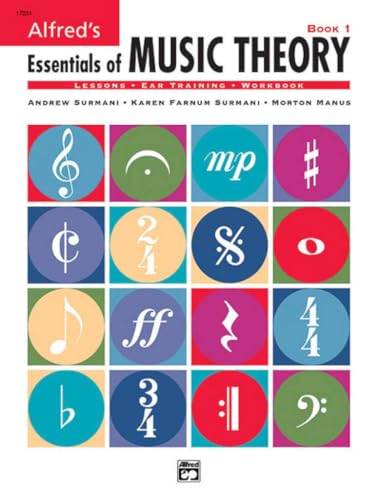
Best for beginners who want a structured entry into music theory. The book comprises 25 concise lessons that cover staff notation, pitches, clefs, time signatures, note values, dynamics, flats, sharps, and basic scale steps. It blends reading and writing exercises with ear-training support, helping learners connect theoretical concepts to aural perception. A good fit for students who benefit from a classroom-style progression and unit reviews to reinforce retention. Caution: CDs for ear-training exist separately, so you may need to source them if you want guided listening practice.
Who it’s for: students of any age who prefer a clear, step-by-step start and value integrated practice. Why selected: it provides a comprehensive, all-in-one approach suitable for beginners and non-musical readers who want a solid foundation before moving to advanced theory.
Alfred’s Essentials of Music Theory: A Complete Self-Study Course for All Musicians

Best for self-guided learners who want a thorough, book-plus-CDs format. This edition is designed as a complete self-study course for all musicians, including a broad array of theoretical concepts and practical exercises. It’s a strong pick for independent study, with contributors Andrew Surmani, Karen Farnum Surmani, and Morton Manus providing a comprehensive perspective on music theory and its application. Limitation: some learners may prefer digital or interactive formats over printed CDs.
Who it’s for: adults or teens who will study alone and want a portable, all-in-one resource. Why selected: it offers a longer, more thorough treatment of theory concepts that complements hands-on piano practice and notation reading.
GP661 – Fundamentals of Piano Theory – Level 1

Best for early-stage piano students who want a focused introduction to theory. This foundational text emphasizes essential concepts in a clear, approachable way, aligning with beginners who are concurrently learning to play. It’s a solid starting point for establishing reading and rhythm skills in parallel. Caution: described as a used book in good condition, so you may want to verify the edition and page integrity before purchase.
Who it’s for: beginners needing a straightforward primer that ties theory to piano practice. Why selected: it emphasizes core skills without overwhelming advanced topics, making it easy to build confidence early in the learning journey.
Piano Adventures: Theory Book – Primer Level

Best for young beginners and early note readers who benefit from a structured method. The Primer Level theory book accompanies the Piano Adventures method, offering integrated note reading and rhythm practice. This book emphasizes practical exercises and musical activities that reinforce theory concepts through familiar repertoire. Limitation: the content is designed to align with a specific method, which may require using other books in the same series for full coherence.
Who it’s for: children and early learners who respond well to visual and musical cues. Why selected: it connects theory to real piano pieces, supporting progressive skill-building and engagement.
Adult Piano Adventures: All in One Course – Book 1

Best for adults who want an approachable, comprehensive theory and playing program in one volume. This book combines theory with practical piano instruction and chord notation, featuring more than 90 songs that illustrate important theory concepts. It’s suitable for self-learners who appreciate a broad repertoire and clear, notation-based practice. Caution: content spans both theory and technique, so some learners may prefer separately focused theory texts to deepen certain topics.
Who it’s for: adult learners seeking a guided path that blends theory with repertoire and notation. Why selected: it delivers an expansive, real-world classroom feel for adults who want to see theory applied in realistic pieces.
Buying Guide: Key Purchase Considerations For Piano Theory Books
What level should you start at?
Begin with level-appropriate materials. True beginners benefit from books that thoroughly explain staff reading and rhythm, while advanced beginners can jump into self-study formats or material with more repertoire examples.
Should you choose a method-aligned book?
Method-aligned books, like Piano Adventures, can be excellent when you’re following a structured curriculum. If you prefer flexibility, choose standalone theory books that cover the fundamentals without tying you to a single teaching sequence.
Is self-study feasible for theory alone?
Self-study can work well if the book includes clear explanations, practice exercises, and answer keys. CDs or digital audio support is a plus for ear training, though not strictly required if you’re pairing with a teacher or other resources.
What about ear training and notation practice?
Look for books that explicitly integrate ear training and notation practice. Materials that include reading exercises, rhythm clapping, and listening tasks help reinforce theoretical concepts more effectively.
What format suits your learning style?
Printed books are reliable and portable. If you prefer interactive elements, consider additional digital resources or companion audio CDs that complement the text.
Durability and longevity
Choose books with durable binding and quality paper, especially for younger students who may handle the pages more frequently. A well-structured table of contents and index helps with quick reference.
Common limitations to consider
Be aware of edition-specific content and potential gaps in topics. Some books are tied to a particular method or inclusions such as CDs or digital files that may affect long-term accessibility if formats change.
FAQ
- What’s the best starter piano theory book for beginners? Alfred’s Essentials of Music Theory, Book 1, offers a solid starter structure with essential topics and practice.
- Are CDs important for piano theory? CDs can enhance ear training, but many learners succeed with printable exercises and online audio resources.
- Can adults benefit from beginner theory books? Yes, adult-focused titles like Adult Piano Adventures provide practical content and a repertoire that matches adult learning styles.
- Should I buy more than one theory book? It depends on your goals: one foundational book plus a method-aligned workbook can cover theory and repertoire effectively.
- Is self-study effective for theory? When the book includes clear instructions, exercises, and review sections, self-study can be highly effective.
- What if I’m using a teacher? Your teacher can guide you toward the book that best aligns with your current curriculum and progress.