Finding the right science resources for school can boost comprehension, engagement, and long-term curiosity. The following five titles cover foundational biology, general science practice, forensic investigations, hands-on experiments, and comprehensive 8th-grade science skills. Each selection aligns with common standards and supports both classroom and homeschooling environments. Use this guide to compare topics, activities, and skill-building approaches to fit your curriculum goals.
| Product | Brand | Highlights | Page Count |
|---|---|---|---|
| Carson Dellosa The 100 Series: Biology Workbook—Grades 6-12 | Carson Dellosa Education | Biology vocabulary, standards-aligned, extended activities | 128 |
| Mark Twain Grades 5-8 General Science Workbook | Mark Twain Media | Comprehensive practice across NSE standards, diverse topics | 128 |
| The Everything Kids’ Science Experiments Book | Simon & Schuster | 230+ experiments, hands-on exploration | ~144 |
| Mark Twain Forensic Investigations Workbook | Mark Twain Media | Critical thinking, DNA and handwriting labs | ~128 |
| Evan-Moor Daily Science | Evan-Moor Educational Publishers | Daily activities, Earth/Life/Physical science | ~160 |
These selections emphasize practical learning, skill reinforcement, and inquiry-based activities. Each product presents clear objectives, student-friendly explanations, and exercises designed for independent work or guided instruction. The list balances biology-specific resources with broader science workbooks and hands-on science ideas that suit varied timelines and classroom sizes. Read on to explore each option in detail and learn which may best complement your science curriculum.
Biology-Focused Workbook for Grades 6-12
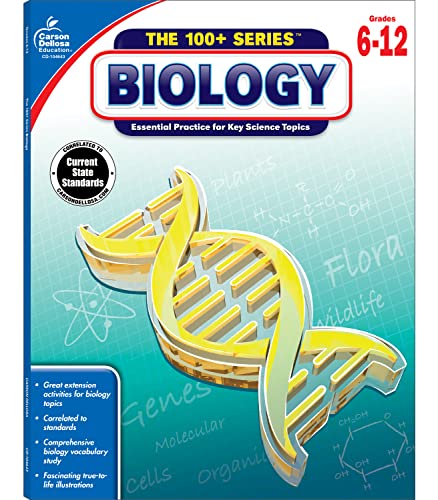
The Carson Dellosa The 100 Series Biology Workbook targets middle and high school learners with a structured approach to core biology topics. Its organization supports teachers and homeschoolers seeking a standards-aligned resource that reinforces essential vocabulary and concepts. The workbook offers clear definitions and context for terms related to matter, atoms, cells, genetics, elements, and bonds, helping students build a solid scientific vocabulary. In addition, it includes extended activities that encourage deeper thinking and practical application of biology principles, making it a versatile classroom supplement or independent study tool.
Key features include:
– Great extension activities for science and biology
– Correlated to standards
– Comprehensive biology vocabulary study
Ideal for teachers needing a comprehensive review or a structured practice workbook for STEM labs, this title pairs well with lab activities and discussion prompts to reinforce understanding of foundational biology topics. Its concise format makes it approachable for independent learners while providing enough depth for advanced students. The emphasis on vocabulary development supports successful reading comprehension of science textbooks and articles, a critical skill across all biology units.
General Science Workbook for Grades 5-8

The Mark Twain Grades 5-8 General Science Workbook provides a broad spectrum of topics across physical, earth, space, and life sciences. This volume supports NSE standards and offers extra practice aligned with classroom lessons. Its organization makes it suitable for supplementing core science curricula or as a primary resource for homeschoolers seeking steady, structured practice. Students will engage with activities that reinforce essential scientific concepts and bolster study skills, measurement, data interpretation, and observational techniques.
Highlights include:
– Supports NSE standards
– Students gain extra practice with the skills they are learning
– Broad coverage across science disciplines for grades 5-8
Educators can use it to reinforce learning after classroom demonstrations or as a weekly practice book. For homeschool families, this workbook can serve as a reliable spine for a multi-topic science program, ensuring consistent progress across core domains such as solar system studies, weather, energy, natural disasters, and introductory biology ideas. The inclusive design accommodates diverse learners, encouraging steady skill development alongside engaging activities.
The Everything Kids’ Science Experiments Book
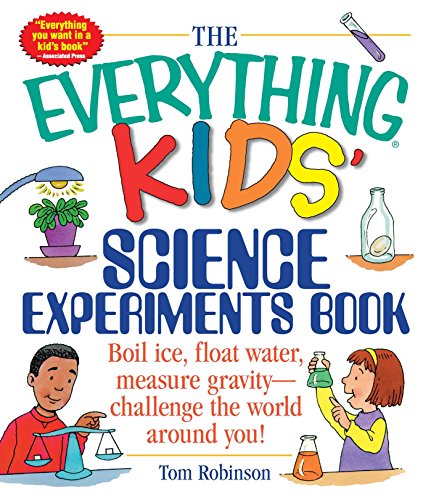
The Everything Kids’ Science Experiments Book is a hands-on resource designed to spark curiosity through interactive experiments. This title is well-suited for classroom projects, family science nights, or independent study. Its approach encourages students to hypothesize, test, observe, and draw conclusions, mirroring the scientific method in a friendly, approachable format. Although marketed to a younger audience, the experiments cover a wide range of scientific concepts, from physics to chemistry to earth science, making it a flexible supplement for a diverse science program.
Notable aspects:
– 230+ experiments and activities
– Clear, kid-friendly explanations
– Encourages hands-on learning and critical thinking
Teachers and parents can integrate these activities as stand-alone projects or as part of a larger unit. The book’s step-by-step instructions make execution straightforward, while the open-ended prompts help students articulate observations and reasoning. It’s a practical addition for STEM clubs, after-school programs, or any setting that prioritizes experiential learning and practical discovery.
Forensic Investigations Workbook for Middle School

The Mark Twain Forensic Investigations Workbook introduces students to the science behind crime scene analysis. The activities emphasize deductive reasoning and evidence interpretation, with scenarios that allow for multiple plausible outcomes. This approach promotes critical thinking and collaborative problem-solving, aligning well with inquiry-based learning models. The workbook includes hands-on activities such as handwriting analysis and fingerprinting, helping students explore scientific methods in a real-world context and develop sound reasoning about evidence and conclusions.
Key benefits:
– Builds deductive reasoning and observation skills
– Multiple plausible outcomes promote critical thinking
– Activities include handwriting analysis and fingerprinting
This resource is especially suitable for middle school classrooms or homeschooling programs seeking a criminology-inspired science component. It provides guidance for teachers on facilitating investigations, while also encouraging students to draw evidence-based conclusions. The hands-on activities support kinesthetic learners and help translate theoretical concepts into practical skills.
Daily Science Workbook for Grades 3

The Evan-Moor Daily Science workbook offers daily practice across Earth, Life, and Physical Science topics, making it an ideal resource for consistent skill-building. Its structure supports classroom routines and homeschool schedules, with printable worksheets that cover a breadth of science ideas. The worksheets emphasize vocabulary development, essential concepts, and practice with scientific reasoning, making it a solid foundational tool for early elementary science programs. The resource is designed to complement ongoing science instruction by reinforcing key ideas through regular, manageable activities.
Highlights include:
– Printable worksheets for daily practice
– Broad coverage of Earth, Life, and Physical Science
– Useful for vocabulary building and test preparation
Educators can use this workbook to supplement lesson plans with quick, repeatable exercises that reinforce core ideas. For families homeschooling, it provides a convenient daily routine that strengthens literacy and scientific thinking at a pace appropriate for younger learners while still laying groundwork for more advanced topics later on.
8th Grade Science Workbook

The Spectrum 8th Grade Science Workbook helps students consolidate knowledge across natural, earth, and life science topics. This workbook is designed to align with current state standards while providing a variety of activities that encourage science literacy and critical thinking. It includes research activities, which support independent inquiry and information evaluation. The book’s diverse activities help students prepare for high school science, offering a bridge between middle school studies and more advanced coursework.
Key features:
– Based on current State Standards
– Varied activities to develop science literacy
– Supports learning in natural, earth, and life science
Educators can use this workbook as a core or supplemental resource for grade 8 science units, while homeschool families may adopt it as a primary source for a year-long curriculum. It balances content review with exploratory questions that prompt students to investigate and report findings, reinforcing the scientific method throughout the year.
Buying Guide: Key Purchase Considerations
Curriculum Alignment and Topic Coverage
Choose resources that align with your state standards or national science guidelines. Look for books that provide broad topic coverage (earth, life, physical science) as well as targeted areas (biology, forensic science). A mix of general science workbooks and topic-specific titles helps build a cohesive program.
Skill Development Focus
Consider whether the primary goal is vocabulary building, procedural fluency, data interpretation, or critical thinking. Vocabulary-focused manuals support comprehension in science texts, while hands-on activity books encourage practical application of concepts. Forensic and inquiry-based titles emphasize deduction, evidence interpretation, and reasoning skills.
Format and Accessibility
Assess the format that best fits your students: printable worksheets, bound workbooks, or interactive activities. For homeschooling, consider a blend of printables and structured books that can be used offline. In classrooms, seek resources with teacher guides, answer keys, and easy-to-follow layouts for efficient lesson planning.
Hands-On and Inquiry-Based Learning
Hands-on experiments and investigative activities can boost engagement and retention. If you want project-based learning, prioritize titles with clear experiment steps, safety guidance, and extension ideas. For lighter workloads, choose resources with a balanced mix of reading, questions, and experiments.
Age and Grade Suitability
Match the book level to your students’ grade and ability. Some titles span multiple grades and offer tiered activities, while others are targeted to a specific year range. The right choice supports appropriate challenge without overwhelming learners.
Durability and Longevity
Consider how often the material will be used and by whom. Durable print quality, clear illustrations, and legible layouts help ensure the content remains useful over time. For shared classrooms, sturdy binding and durable paper may be important, while for homeschool use, portability and ease of use can influence the decision.
In sum, selecting science books for school should balance standards alignment, skill-building emphasis, and practical usability. A diverse mix of general science workbooks, topic-focused titles, and hands-on activity books provides a well-rounded program that can support students across varied learning styles and timelines. The right combination encourages curiosity, reinforces essential science concepts, and builds a solid foundation for ongoing science education.