Choosing sheet music for school programs, private lessons, and classroom activities requires a balance of accessibility, educational value, and breadth of repertoire. The following selections are tailored for school environments, offering beginner-friendly arrangements, comprehensive method books, and enduring classics that support music literacy, ensemble work, and performance confidence. Each item is evaluated for suitability in classrooms, rehearsal time, and ease of use for teachers and students alike.
Summary of chosen products:
| Product | Audience | Key Benefit |
|---|---|---|
| Manuscript Paper – Hal Leonard | Students & Teachers | Reliable notation paper with clear staves and a built-in guide |
| Old Town School of Folk Music Songbook | All Instruments | Lead sheets, lyrics, and chords for a broad repertoire |
| Best Songs Ever Super Easy Piano | Beginners & Adults | Wide catalog of classics with simple arrangements |
| Library of Piano Classics | Intermediate to Advanced | Timeless repertoire for skill development |
| The Best Broadway Songs Ever | Piano, Vocal, Guitar | Extensive Broadway selections for performance-ready pieces |
Manuscript Paper – Hal Leonard Standard Wirebound

This 96-page wirebound notebook provides 12 staves per page, making it ideal for classroom use where multiple students share pages or where teachers want to maximize space for notation. The built-in Music Notation Guide supports beginners learning key concepts, making it a practical tool for early music literacy. Durable spiral binding ensures pages lay flat for easy writing during lessons and exams. The combination of clear staves and structured layout supports steady progress across choral, instrumental, and general music theory activities.
Key features include a portable format for student work, standardized notation space, and a reference guide that clarifies basic symbols and terms. This product aligns well with school curricula that emphasize hands-on notation practice, formative assessment, and independent study. Teachers can use the 96 pages as a semester-long notebook for daily writing exercises or a quick-practice journal for instrumental or vocal ensembles.
Educational value: strong for notation practice, staff management, and quick reference during lessons. Potential limitations include the absence of advanced engraving features or digital integration, which may require supplementary software for higher-level courses. Overall, this manuscript paper is a reliable classroom staple that supports consistent notation practice and workflow in school settings.
Old Town School Of Folk Music Songbook 60th Anniversary Edition

This collection aggregates traditional and contemporary folk songs with lead sheets, lyrics, and chords suitable for all instruments. With 184 pages of material, it serves as a robust resource for classroom ensembles, guitar classes, ukulele groups, and general music appreciation. The All Instruments instrumentation makes it flexible for mixed-age ensembles in schools, including beginner and intermediate players. Teachers can leverage the varied repertoire to build literacy in melody, chord symbols, and lyric interpretation while encouraging collaborative performance and folk music exploration.
Educational value: fosters ensemble work and chord-reading skills; broad repertoire supports cultural literacy and cross-curricular connections. Potential considerations include varying difficulty across entries; teachers may need to pre-select appropriate arrangements for specific class levels. Overall, this songbook is a strong, versatile addition to school music libraries and library-resourced classrooms that emphasize accessible arrangements and communal learning.
Best Songs Ever Super Easy Piano Songbook

Designed for beginners and adults, this easy piano book features 60 classic songs with simple arrangements, lyrics, and practice-friendly layouts. It’s a practical choice for school piano labs, early-session recitals, and classroom demonstrations where quick student progress matters. The focus on right-hand melodies, basic chords, and readable notation helps novices build confidence as they learn core musical concepts while enjoying recognizable tunes. The collection also serves as a bridge between method books and more ambitious repertoire, supporting incremental learning in a school setting.
Educational value: supports incremental skill development, sight-reading practice, and student engagement through familiar songs. Potential considerations include some songs requiring basic left-hand accompaniment or chord charts for fuller arrangements; teachers may choose to pair this with a separate method book for a complete piano curriculum. Overall, it’s a user-friendly resource to supplement early piano education and group practice sessions in schools.
Library Of Piano Classics

This collection provides a curated set of famous classical piano pieces suitable for intermediate to advanced players. Its timeliness as a classroom resource is twofold: it offers timeless repertoire that supports technique development while giving teachers ready-to-use recital selections. The volume’s inclusion in school libraries helps students build a diverse classical foundation, facilitating cross-curricular discussions about musical periods, forms, and stylistic nuances. The reference label “Amsco Publications Model#752187668954” indicates a recognized publisher with a history of educational editions.
Educational value: strong for technique development and music history context; appropriate for advanced classes, recital preparation, and enrichment programs. Potential considerations include the level of difficulty; instructors may need to adapt selections for mixed-ability ensembles. Overall, this title is well-suited for schools seeking robust classical repertoire that aligns with performance objectives and music theory coursework.
The Best Broadway Songs Ever
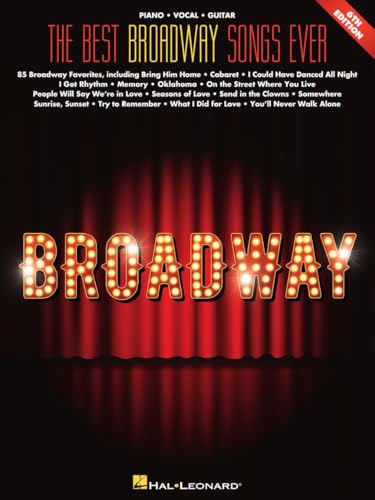
This 6th edition collection centers on Broadway classics for piano, vocal, and guitar arrangements. With 416 pages, it offers a comprehensive catalog of songs suitable for school performances, talent shows, and classroom demonstrations. The P/V/G arrangement format makes it adaptable for mixed-ability ensembles, including vocal ensembles and accompanying instruments. Teachers can use this book to teach phrasing, ensemble balance, and stage presence through familiar theater repertoire. It also supports cross-curricular connections to theater arts and storytelling through music.
Educational value: broad repertoire for performance-based learning; useful for vocal clinics, musical theater units, and ensemble rehearsals. Potential considerations include license considerations for public performance and the need for accompaniment tracks in some settings. Overall, it’s a strong fit for schools aiming to expand repertoire with high-visibility, engaging Broadway selections that align with performance goals.
Buying Guide: Key Purchase Considerations For School Music Programs
- Learning level alignment: Ensure the material matches the grade level and musical proficiency across your classroom or ensemble. Books with adjustable difficulty or bundled method content help instructors tailor lessons.
- Repertoire breadth: A mix of method, ensemble, and repertoire titles supports ongoing development from notation basics to performance pieces. Consider a catalog that spans classical, contemporary, and traditional genres for student engagement.
- Notation and reading support: For younger or beginner students, resources with clear staves, notation guides, and simplified arrangements improve comprehension and progress tracking.
- Instrumentation flexibility: All-instruments editions or collections with transferable arrangements help mixed ensembles, from strings and winds to keyboards and guitars, maximizing classroom use.
- Performance potential: Look for books that offer recital-ready materials and easy-to-teach ensemble pieces to build confidence and motivation among students.
- Durability and format: Spiral-bound or sturdy hardcover formats withstand frequent use in classrooms. Consider whether pages can lie flat for comfortable practice and note-taking during lessons.
- Publisher and edition quality: Trusted publishers with classroom-oriented edits (clear notation, accurate lyrics, and reliable difficulty progression) reduce teacher prep time and confusion for students.
- Accessibility and licensing: Some pieces may require performance licenses for public concerts. Check if the selection is suitable for school performances or if campus-specific permissions are needed.
- Cost and longevity: Favor books with lasting appeal and broad appeal to reduce the need for frequent replacements. Repertoire with evergreen titles often provides better long-term value for schools.
In summary, effective school sheet music selections balance notation clarity, repertoire variety, and classroom practicality. The cited items offer a spectrum from foundational manuscript resources to broad performance collections, supporting day-to-day instruction, instrumental and vocal ensembles, and student engagement across the school year. When planning a school library, consider pairing beginner-friendly titles with more advanced pieces to accommodate growth and ensemble opportunities.