Summer is a prime time for young learners to strengthen literacy and critical thinking skills with fun, structured practice. This guide highlights four highly regarded kindergartener workbooks that support early reading, phonics, and math readiness. Each option includes age-appropriate activities, engaging visuals, and standards-aligned content to help kids stay sharp over the break. Explore practical features, target skills, and how each workbook fits into a balanced summer routine.
Summary of Selected Products
- School Zone Thinking Skills Workbook (Kindergarten) – Focuses on problem-solving, logic, and reasoning puzzles for ages 3 to 5.
- Spectrum Kindergarten Phonics Workbook – Phonics, letter recognition, and sound practice across 144 pages.
- Carson Dellosa Phonics for Kindergarten Workbook – Sight words, consonant and vowel sounds with engaging games and puzzles.
- Preschool Big Fun Workbook – Comprehensive preschool learning with math, writing, shapes, and more, designed for early learners.
Best for Early Thinking Skills and Logic Development

The School Zone Thinking Skills Workbook emphasizes critical thinking through a variety of puzzles designed for preschoolers and kindergartners. The content centers on problem-solving, logic, and reasoning, helping children build cognitive skills in a playful format. The workbook’s pages integrate visual cues with short prompts, enabling young learners to practice sequencing, pattern recognition, and deducing outcomes. With 64 pages of activities, it serves as an approachable entry point for reinforcing thinking skills during summer sessions. The format supports both independent work and guided teacher or caregiver instruction, making it versatile for home, after-school, or classroom use.
Best Phonics Foundation with Letter Practice

Spectrum’s Kindergarten Phonics Workbook is designed to reinforce essential reading fundamentals as kindergartners transition into more complex literacy tasks. The 144-page workbook covers letter recognition, alphabet order, and letter-sound connections, with exercises that integrate phonics, structural analysis, and dictionary skills. The workbook emphasizes systematic phonics practice and word-building strategies, supporting both emerging readers and those needing extra reinforcement over the summer months. Its structured activities help children apply phonics rules in a readable, engaging format, suitable for homeschooling or supplementing classroom instruction during breaks.
Best Comprehensive Phonics with Games and Rewards
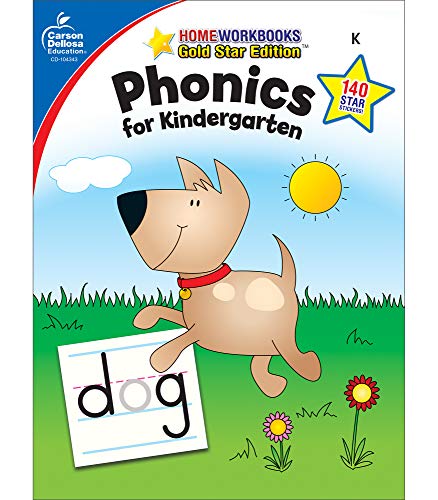
Carson Dellosa Phonics for Kindergarten focuses on beginning consonant and short vowel sounds, paired with sight words and educational games. The workbook is part of a popular Home Workbooks series that blends learning with entertaining activities, puzzles, and games aligned to early literacy standards. It includes an incentive chart and 140 stickers to motivate engagement and sustained effort. The colorful, kid-friendly pages help readers connect sounds to letters in a visual context, making it an effective option for classroom use or homeschooling. The activities emphasize language arts readiness and foundational reading confidence for young learners.
Best Fun, Broad Preschool Practice

The Preschool Big Fun Workbook provides a broad spectrum of early learning activities across a 256-page format. It covers ABCs, sight words, colors, basic math concepts, writing practice, shapes, puzzles, and more, delivering a well-rounded foundation for kindergarten readiness. The variety of activities helps sustain engagement over the summer, catering to diverse learning styles through hands-on practice and color-rich illustrations. While designed for preschool, it supports transition to kindergarten by reinforcing essential pre-reading and early math skills in a structured yet playful way.
Buying Guide: Key Considerations for Summer Kindergartner Workbooks
To choose the best workbook for a rising kindergartner, consider the following perspectives and practical criteria. The goal is to balance challenge with engagement, aligning with learning goals and daily routines during summer break.
- Skill focus and alignment: Identify the core areas your child needs to strengthen—phonics, reading readiness, math concepts, or executive thinking. Look for workbooks that clearly emphasize those targets and provide progression that matches a child’s development.
- Age appropriateness and pacing: Ensure the content is suitable for a kindergartner’s developmental level. Some workbooks skew younger or older; choose options with approachable grids, larger print, and achievable tasks that sustain motivation without frustration.
- Structure and variety: A mix of activities—puzzles, games, writing, and cut-and-paste tasks—helps maintain interest. Workbooks with varied formats also support different learning styles, including visual and hands-on learners.
- Visual appeal and accessibility: Bright, friendly illustrations and age-appropriate fonts reduce cognitive load and encourage persistence. Check for clear instructions and moderate page density to avoid overwhelm during shorter daily sessions.
- Teacher or caregiver flexibility: Some workbooks include incentive charts, stickers, or certificates, which can be valuable for tracking progress and staying motivated. Consider whether these extras align with your child’s preferences.
- Home-school and classroom compatibility: If you’re supplementing classroom work, pick titles that reinforce common standards and topics covered in the curriculum. In homeschooling, look for non-repetitive, well-sequenced activities.
- Progress tracking and assessment: Evidence of attainable milestones—like sound-letter recognition or early sight-word mastery—helps you gauge improvement and decide when to move to the next level.
- Durability and materials: For younger children, sturdy pages, spiral binding, and brushed, non-glossy layouts reduce frustration with tearing and glare. Consider the expected duration of use over the summer period.
- Price and value: Compare page counts, diversity of activities, and the total number of usable weeks in the summer plan. A higher page count with varied tasks can offer more long-term value even at a higher upfront cost.
Choosing the right mix depends on your child’s interests and learning pace. A short daily routine—20 to 30 minutes of guided practice plus independent play—can yield meaningful gains while preserving summer enjoyment. For families balancing multiple kids or limited classroom resources, these workbooks can serve as dependable, flexible tools that reinforce foundational reading, writing, and thinking skills.