Whether you’re starting a new spiritual practice or simply curious about tarot, this guide highlights five beginner-friendly decks and their accompanying books. Each option emphasizes ease of learning, clear meanings, and durable design. This list helps new readers decide which set best fits their learning style—whether they prefer a traditional Rider-Waite approach, a modern instructional guide, or a richly illustrated deck with built-in meanings.
Quick comparison table of selected products:
| Product | Best For | Why It Stands Out |
|---|---|---|
| KLEDERY Tarot Cards for Beginners | Beginners who want meanings on cards | Includes upright/reverse meanings, zodiac, numerology, and a durable 350GSM deck |
| The Rider Tarot Deck: The Authentic Rider-Waite | Traditionalists and learners seeking classic imagery | Iconic Waite imagery with a dedicated instruction booklet |
| SUNHHX Tarot Cards Set | Accessible visuals for quick interpretations | 78 cards with distinct designs and an accompanying English guide |
| The Original Tarot, Deck of 78 Cards | Historical/art-focused beginners | Classic Pamela Colman Smith artwork with a comprehensive guidebook |
| Wyspell Tarot for Learning | In-depth study with a detailed guidebook | Extensive guidebook and enriched keyword system |
KLEDERY Tarot Cards for Beginners

The KLEDERY deck follows the classic Waite system with a built-in guide that marks meanings for upright and reversed cards. It also aligns with zodiac signs, elements, numerology, and yes/no/maybe cues, which helps new readers anchor interpretations. Best for: beginners who want a recognizable traditional layout combined with immediate reference on each card. Limitation: the printer’s color fidelity may vary with extensive use; consider a protective storage option if you shuffle often.
The Rider Tarot Deck: The Authentic Rider-Waite
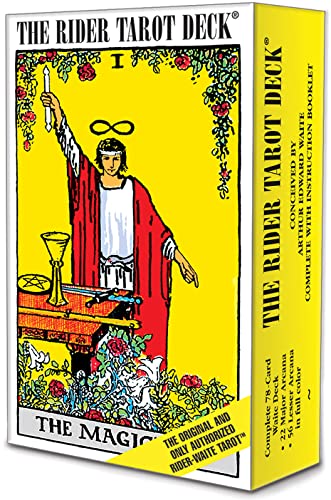
The Rider-Waite deck is the standard-bearer for many readers, offering iconic imagery that aligns with widely available instructional resources. Best for: readers who want a classic deck with a comprehensive instruction booklet to guide both novices and more experienced users. Limitation: the deck’s symbolic language can require time to interpret for some beginners; pairing with a structured study plan helps.
SUNHHX Tarot Cards Set

SUNHHX emphasizes user-friendly visuals and a concise English instruction book, making it suitable for absolute beginners who prefer straightforward reading prompts. Best for: readers who want a compact, easily navigable deck with quick-reference guidance. Limitation: fewer advanced spreads documented; learners aiming for complex layouts may want a supplemental guide.
The Original Tarot, Deck of 78 Cards

This deck uses classic Pamela Colman Smith artwork with a linen-finish 350 gsm card stock and an 86-page guidebook explaining upright and reversed meanings plus beginner tips. Best for: users who value historical artwork and a thorough introductory guide. Limitation: traditional imagery may feel unfamiliar to some modern readers; consider pairing with a modern interpretation guide if needed.
Wyspell Tarot for Learning
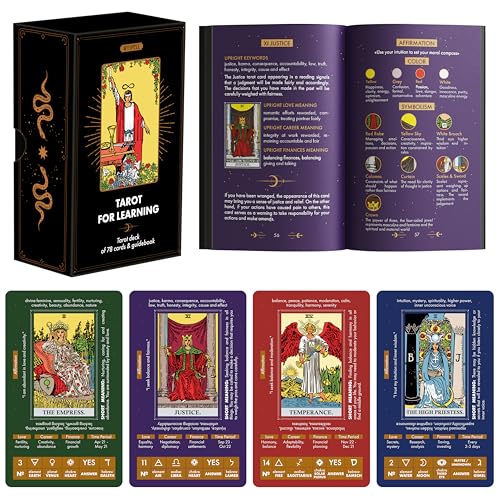
Wyspell pairs enhanced classic illustrations with a robust guidebook and an expanded keyword system that covers love, career, finance, chakras, and more. Best for: readers who want a deeper, structured learning path with comprehensive interpretations. Limitation: the broader keyword set may require more study time to master.
Buying Guide
What should you consider when choosing a tarot book and card deck?
- Learning style: Do you prefer in-card meanings, a separate guide, or a combination? Choose a deck that aligns with how you study—on-card cues or external references.
- imagery and tradition: Do you want the classic Rider-Waite visuals or modern designs? Traditional decks help with broader community interpretation, while modern decks can feel more intuitive.
- card stock and durability: Consider 350GSM or similar stock for frequent handling. A durable finish helps avoid color shedding during shuffles.
- included guidebook: A comprehensive guide supports beginners, especially when it covers upright/reversed meanings and basic spreads.
- learning resources: Some decks pair with extensive online materials, videos, or printable spreads—useful for structured study.
- future growth: If you plan to advance, look for a deck that offers deeper symbolism and a well-rounded guidebook to support later learning.
FAQ
- What is the best starter tarot deck?
There isn’t a single best deck; it depends on your learning preference. A deck with built-in meanings and a clear guidebook is often easiest for beginners. - Should I choose a traditional or modern deck for learning?
Traditional decks like Rider-Waite provide broad community familiarity, while modern decks can offer clearer personal resonance. Start with the one that feels more intuitive. - Is a guidebook necessary for beginners?
Not strictly, but a good guidebook helps with consistent interpretations and learning fundamentals, especially for upright vs. reversed meanings. - What should I look for in card stock?
Durable cardstock (around 350GSM or similar) that resists tearing and color wear is ideal for regular shuffling. - Can I use any deck for all tarot readings?
All tarot decks share core symbolism, but some readers prefer a specific deck for certain spread styles or thematic resonance. - How do I start learning tarot readings?
Begin with a single deck and a basic guidebook, practice daily, and gradually explore common spreads while noting personal interpretations.