Home educators can leverage structured unit studies to blend core subjects into cohesive, inquiry-driven learning. This guide highlights five highly regarded options that align with common state standards and support science, social studies, and literacy development. Each entry includes a concise overview, notable strengths, and how it fits in a homeschool setting. Use the Buying Guide at the end to compare options and choose the best fit for your family’s goals and schedule.
Summary of Selected Products
| Product | Brand | Core Focus | Highlights |
|---|---|---|---|
| Core Skills Social Studies, Grade 4 | HOUGHTON MIFFLIN HARCOURT | Social Studies (Grade 4) | Structured units, core skills practice |
| Spectrum Grade 4 Science Workbook | Spectrum | Science (Methods, Earth/Life/Natural) | State-standards-aligned, varied activities |
| Mark Twain Forensic Investigations Workbook | Mark Twain Media | Science and Critical Thinking | Deductive reasoning, hands-on labs |
| Mark Twain Grades 5-8 General Science Workbook | Mark Twain Media | Science (Solar System to Biology) | Practice in NSE-aligned areas |
| Carson Dellosa The 100 Series: Biology Workbook | Carson Dellosa Education | Biology Concepts | Vocabulary and standards alignment |
Core Skills Social Studies, Grade 4

This grade-4 social studies workbook emphasizes core skills and structured unit lessons that align with many state standards. It provides age-appropriate content, maps, vocabulary practice, and comprehension exercises designed to reinforce critical thinking about communities, geography, and civic concepts. The format supports independent work or guided instruction, making it suitable for homeschoolers who want a reliable, ready-to-use social studies program in a unit-study style.
Spectrum Grade 4 Science Workbook
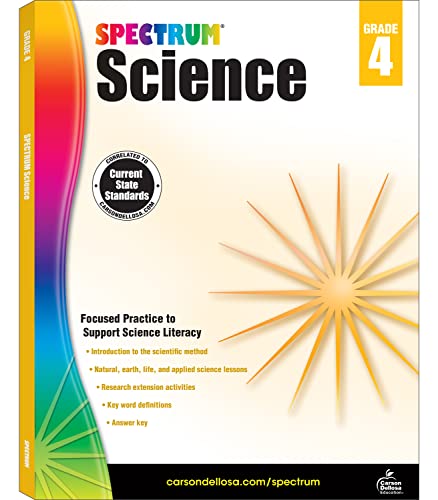
The Spectrum Grade 4 Science Workbook covers scientific methods and a broad range of topics across natural, earth, and life sciences. This workbook-style resource is well-suited for homeschool use, offering concise explanations, hands-on activities, and review questions that align with current state standards. It supports both new and review learning, enabling students to build science literacy through varied activities and structured practice.
Mark Twain Forensic Investigations Workbook

This workbook focuses on critical thinking through forensic-style activities. Students analyze clues, interpret handwriting, fingerprints, body language, and other evidence to solve scenarios. The material encourages collaborative inquiry or individual investigation, helping learners develop deductive reasoning and evidence-based conclusions—valuable skills across science, history, and problem-solving contexts within a homeschool unit-study framework.
Mark Twain Grades 5-8 General Science Workbook

Cross-disciplinary science practice is the core of this volume, covering the solar system, weather, energy, natural disasters, and biology. It aligns with NSE standards and provides opportunities for extended projects within a homeschool unit-study approach, helping students connect concepts across physical, earth, space, and life sciences while reinforcing essential skills through varied activities.
Carson Dellosa The 100 Series: Biology Workbook
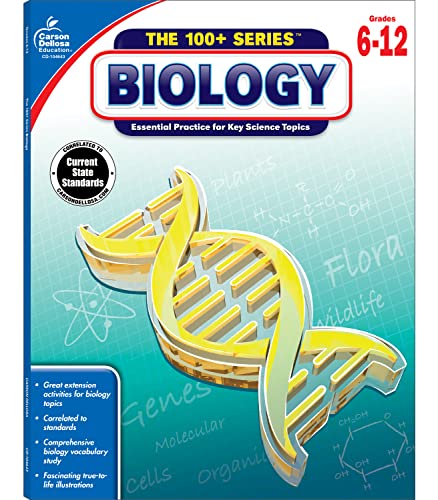
This biology-focused workbook offers extensive vocabulary study and standards-aligned practice. It includes extension activities that complement unit studies in biology, genetics, cells, and matter-related concepts. The resource is suitable for students who benefit from structured practice, clear explanations, and targeted reinforcement as part of a holistic homeschool science curriculum.
Buying Guide: Key Considerations for Unit-Study Homeschool Curricula
- Grade alignment and standards: Check how closely the materials map to your state or national standards and whether they offer flexible pacing for unit-based learning.
- Subject breadth vs. depth: Decide if you need broad coverage across social studies, science, and biology, or deeper focus on a few topics with project-based elements.
- Hands-on and inquiry opportunities: Look for resources that include experiments, labs, or investigative activities to engage students in active learning.
- Independent work vs. guided instruction: Consider the student’s independence level and choose resources that fit your daily schedule, including teacher-led or self-paced options.
- Assessment and progress tracking: Prefer materials with built-in quizzes, answer keys, and progress checks to monitor growth over time.
- Material format and accessibility: Evaluate whether you prefer workbook-style formats, literature-based units, or mixed-media resources, and ensure compatibility with your teaching setup.
- Cost and durability: Assess total cost, print quality, and whether the resources are reuse-friendly for future students or siblings.
- Supplemental science alignment: When choosing science-focused unit studies, ensure coverage spans key domains (natural, earth, life sciences) and includes vocabulary support.
- Flexibility for cross-curricular projects: Favor options that allow integration across subjects, enabling cohesive, real-world projects and fieldwork opportunities.
When evaluating unit-study curricula for homeschooling, balance structure with flexibility. Look for resources that provide clear objectives, varied activities, and opportunities for inquiry-driven learning, while accommodating your family’s schedule and learning pace. The five options above offer a mix of social studies, science, and biology focus areas that can be integrated into a cohesive homeschooling plan without sacrificing rigor or engagement.